/Thriveon_logo_IT.svg "Thriveon_logo_IT.svg")
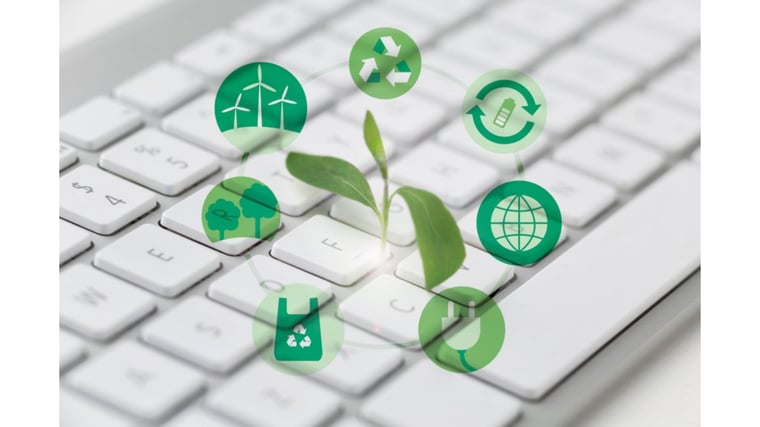
Sustainability is no longer only a social responsibility initiative. It has become a business imperative. Organizations across every industry are under increasing pressure from customers, investors, regulators and employees to reduce environmental impact while maintaining profitability and operational efficiency.
For many companies, the IT department plays a far greater role in sustainability than they realize.
From energy consumption and hardware lifecycle management to cloud optimization and remote workforce enablement, technology decisions directly influence an organization’s environmental footprint. The proper sustainability strategy can reduce waste, lower energy costs, improve operational efficiency and support long-term business resilience.
The Environmental Impact of IT: Why Sustainability Matters in Modern Business
Many organizations underestimate the extent to which their technology environment contributes to energy consumption and waste. Common areas of impact include:
- Data centers and servers: On-premises servers require significant electricity for both operation and cooling. Older infrastructure is often inefficient and expensive to maintain.
- Hardware waste: Frequent device replacement without proper lifecycle planning contributes to growing electronic waste. Improper disposal can also create compliance and security risks.
- Energy consumption: Computers, monitors, networking equipment and printers all consume energy daily, especially in organizations without power management policies.
- Printing and paper usage: Outdated workflows that rely heavily on printing create unnecessary waste and inefficiency.
- Travel and commuting: Technology limitations that prevent remote collaboration can increase travel-related emissions and costs.
That’s why businesses face growing expectations around environmental responsibility. Consumers increasingly prefer organizations that demonstrate sustainable practices, while investors and partners are prioritizing companies with measurable Environmental, Social and Governance (ESG) initiatives.
Beyond reputation, sustainability also impacts operational costs and long-term stability. Rising energy prices, electronic waste concerns and increasing regulatory requirements make inefficient technology infrastructure both costly and risky.
Sustainable IT Best Practices for Business Growth
Sustainability is not simply about reducing environmental harm. It’s also about building smarter, more agile organizations and reducing IT costs. That’s why a modern IT strategy can dramatically reduce harmful impacts while improving business performance. Organizations don’t need to overhaul their entire infrastructure overnight to make meaningful progress. Small, strategic improvements can deliver significant long-term benefits:
- Move toward cloud services: Migrating from aging on-premises infrastructure to cloud-based platforms can significantly improve scalability and resource utilization; in fact, businesses that migrate to the cloud can see a 30-40% reduction in IT costs. Leading cloud providers invest heavily in optimized, energy-efficient data centers that often operate more sustainably than traditional in-house server environments. Cloud platforms also allow businesses to scale resources dynamically, reducing unnecessary power consumption.
- Optimize hardware usage: Routine maintenance, monitoring, repairs and performance optimization reduce premature hardware replacement and minimize unnecessary waste. Businesses that adopt lifecycle planning can make more strategic purchasing decisions and recycle equipment responsibly while avoiding emergency replacements and drawing high amounts of power.
- Embrace remote work: Organizations that embrace hybrid and remote work models often experience lower office energy consumption, reduced real estate costs and greater operational resilience. Secure remote access, collaboration tools and unified communication systems reduce commuting needs and business travel while improving employee flexibility and productivity.
- Automation improves efficiency: Automated workflows reduce repetitive manual processes, unnecessary printing and wasted resources. From digital document management to automated system monitoring, businesses can streamline operations while reducing environmental impact. Power management software can also automate the process of powering down idle equipment.
- Strengthen cybersecurity: It may not be obvious, but cybersecurity and sustainability often go hand in hand. Efficient, secure systems reduce downtime, prevent costly disruptions and support long-term operational stability. Sustainable cybersecurity includes patching, zero-trust architecture and endpoint protection.
- End application sprawl: One of the most overlooked sources of waste is application sprawl. Every redundant software subscription and underutilized platform drains energy. By consolidating your tech stack, you reduce the energy required to power your operations while simultaneously simplifying your team’s workflow.
Sustainability Requires Strategic IT Leadership
Many organizations struggle to align technology decisions with broader business and sustainability goals. Without a clear strategy, though, businesses often end up with fragmented systems, outdated infrastructure, rising costs and increased operational risks.
This is where strategic IT leadership becomes essential.
A Fractional CIO can help organizations align IT with business objectives, identify efficiency opportunities, develop long-term infrastructure strategies, improve operational resilience and support sustainability initiatives through smarter IT investments. By implementing a strategic sustainability plan, you can reduce waste, lower energy use and extend hardware lifecycle while protecting both data and resources.
The Future of Sustainable IT with Thriveon
As technology continues to evolve, sustainability will become increasingly integrated into IT decision-making. More importantly, they create a foundation for long-term success in a rapidly changing business environment.
At Thriveon, we believe sustainable IT is about using IT strategically to create smarter, more efficient business operations. Our Fractional CIO can help your organization build strategic, secure and efficient IT environments that support both business growth and operational sustainability.
Request a consultation now to learn how technology can create a smarter, more sustainable future.