/Thriveon_logo_IT.svg "Thriveon_logo_IT.svg")
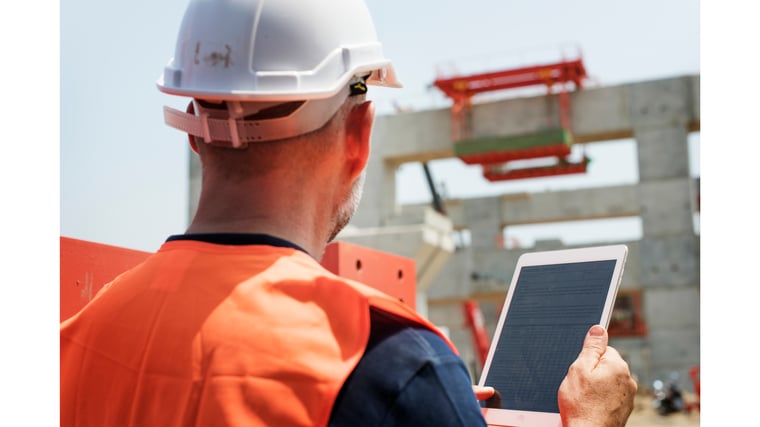
Construction companies depend on speed, coordination and clear communication, but many struggle with technology that wasn’t built to support how construction actually works. From project management platforms to field mobility tools, estimating software to connected equipment, digital systems now sit at the center of daily operations in response to immediate needs. Yet many construction companies still approach IT as a support function that needs to be fixed when it breaks rather than a strategic one that should be built around the company’s goals and needs.
The challenge isn’t that construction lacks technology. It’s that technology often grows without a strategy, leaving leaders uncertain about how to enhance the business. The solution? A Fractional CIO.
Read: Building a Solid Foundation: IT Strategy for Construction
Common Technology Gaps Construction Companies Face
Even well-run construction companies face recurring challenges when IT is treated as a cost center rather than a strategic function: issues are fixed as they happen, software is added only when problems arise and cybersecurity becomes a checklist rather than a program. In many cases, technology decisions are made without a long-term roadmap, clear ownership or a consistent standard across teams.
Without a cohesive IT strategy, gaps begin to erode the bottom line:
- Disconnected systems and duplicate work as teams re-enter the same information across platforms and systems
- Inconsistent workflows across projects, depending on the superintendent or jobsite
- Limited jobsite visibility into labor, equipment usage, productivity and real-time progress
- Unreliable reporting that makes forecasting and decision-making difficult
- Underutilized technology investments that become expensive line items rather than a productivity driver
- Downtime and slow performance that disrupt field productivity and office operations
- Rising cybersecurity risk due to cyber threats like phishing and ransomware, weak access controls and unmanaged devices
These issues don’t always show up as a single major breakdown. Instead, they appear as minor delays, repeated errors, growing frustration and constant workarounds, each one costing time and margin.
Read: 6 Ways a Fractional CIO Can Transform Your IT Strategy
How a Fractional CIO Helps Construction Companies
A Fractional CIO provides executive-level IT leadership on a part-time or flexible basis, giving construction companies access to strategic guidance without adding a full-time C-suite role.
In construction, a Fractional CIO typically helps by:
- Building a practical IT roadmap aligned to business goals that prioritizes high-impact improvements without disrupting active projects
- Standardizing and simplifying technology so teams can work consistently across jobsites
- Improving integration between field and office systems to reduce duplicate entry and increase data accuracy
- Strengthening cybersecurity strategy with policies, training and incident planning for real-world jobsite conditions
- Clarifying IT costs and vendor relationships to eliminate waste and plan budgets proactively
- Creating technology accountability so decisions aren’t made in silos and problems don’t linger unmanaged
Partner with a Fractional CIO to Close the Gaps
Construction companies don’t need more tools – they need a partner who understands how to use technology to solve real business problems and create a competitive advantage. That’s the role of a Fractional CIO, and it’s becoming essential for contractors who want to stay competitive in a rapidly evolving industry. By turning technology from a collection of tools into an organized strategy, a Fractional CIO supports safer operations, higher productivity and more scalable execution.
